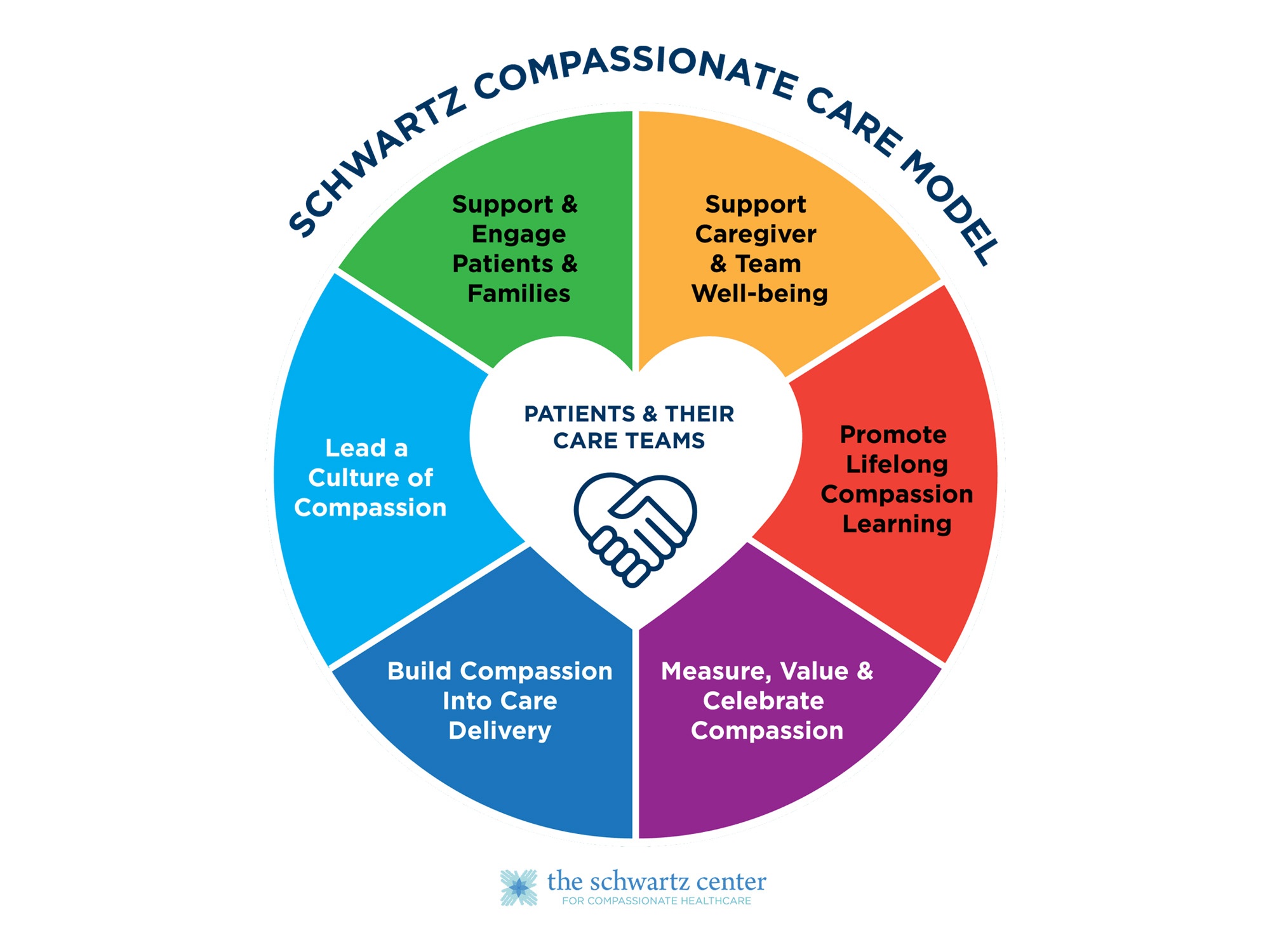
The Schwartz Compassionate Care Model
Compassionate healthcare isn’t just an ideal—it’s essential for patients, families, and their care teams to thrive. Drawing on two decades of research, we have identified the key drivers of compassionate care that will enable healthcare organizations and their leaders to advance an institutional culture of compassion.
This framework unites patient and family-centered care with caregiver and care team well-being, education, and recognition efforts—all guided by leaders who are committed to making sure that compassion thrives. Healthcare organizations must embed compassion in all aspects of training, research, care delivery and organizational culture to deliver care that is safe, effective, equitable, and compassionate.
Making Compassion Actionable: A Model for Healthcare Today
Watch this Webinar to Learn:
Designed for leaders, managers, and frontline caregivers, the session will highlight how compassionate care can be intentionally designed, supported, and sustained, and what the future holds for this shared framework.
Our Definitions of Compassionate Care
Key Drivers of Compassionate Care
All staff will embrace holistic care for patients and their loved ones – partnering to address not only their medical needs, but also their emotional, social, and psychological well-being.
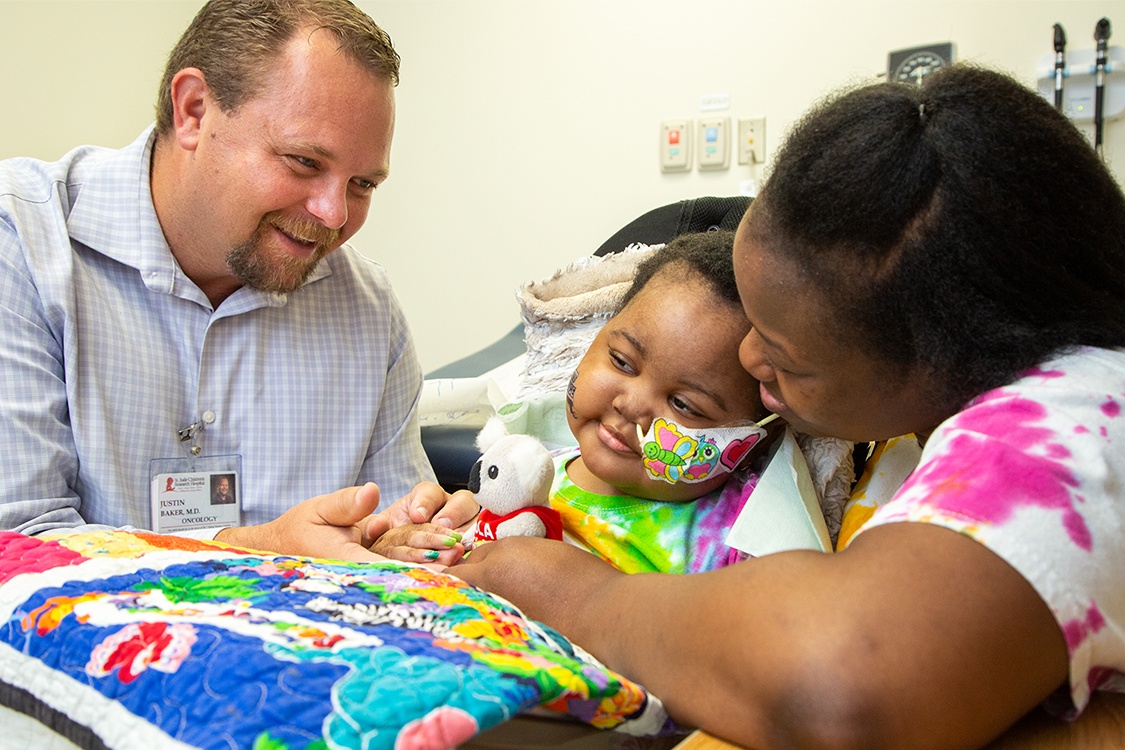
Compassionate caregivers and teams are committed to promoting both health and humanity. They respect the autonomy and dignity of patients, prevent and cure disease when possible, relieve suffering, and nurture the healing process through caring relationships. They honor the preferences and dignity of patients and families, share information, communicate in ways they will understand, and respect their cultural and linguistic needs.
When patients and families participate in shaping and evaluating their own care, they gain knowledge, skills, resources and confidence to manage their health. Motivated patients have higher-quality interactions with their care teams and experience better health outcomes.
Compassionate healthcare organizations partner with their communities to address the social factors that influence health. By integrating patients’ perspectives into the organization’s approach, care delivery can continuously evolve to meet individual and community needs.
Healthcare organizations will prioritize and support caregiver and care team well-being and address systemic factors that contribute to burnout and moral distress.
Healthcare professionals are called to serve and heal, yet they face challenging emotional and administrative burdens. Constant exposure to pain, grief, and trauma puts them at risk for traumatic stress injuries, empathic distress and poor mental health. Stigma often prevents many caregivers from receiving vital mental health support. Leaders can address this by normalizing and increasing access to mental and behavioral healthcare, and by eliminating intrusive disclosure requirements from applications for licensure and clinical privileges.
Caregivers also face inequities, onerous processes and policies, technological demands, and constrained resources, all of which increase their risk for burnout and moral distress, and an associated erosion of compassion. Solutions must address the systemic and administrative barriers that drive burnout and impair caregivers’ ability to provide compassionate care.
Healing happens through community. Caregivers need opportunities for human connection, access to peer support, and psychologically safe spaces to reflect and share their experiences with colleagues.
Health professional trainees, clinicians, and frontline staff will continuously enhance their knowledge, skills and attitudes that enable them to model and provide compassionate care.
Research shows that compassion is innate and hardwired in the human brain, and that it can also be strengthened and cultivated with education, practice, and supportive systems.
While most health professional schools offer courses on the patient-clinician relationship, communication skills, and social issues, the actual modeling and assessment of compassion remains inconsistent. Students and trainees often suffer from traumatic stress and burnout while caring for patients–often at rates that exceed that of their teachers. They may also witness examples of uncaring behavior by role models that inhibit the development of compassionate practices.

Educators should integrate the knowledge and skills required to provide compassionate care across all years and sites of education, training, and practice, including in faculty development and mentoring offerings. Training and feedback in effective interpersonal and communication skills are essential to achieve these goals. Students and trainees will also benefit from opportunities to develop the skills of self-reflection and to participate in discussions about the emotional and psychological impact of caring for patients and their families.
Leaders will consistently take action to value, support, and reward the cognitive, emotional, and collaborative work required for caregivers to provide compassionate care and to measure and track their well-being.
Organizations must measure what matters: safe, equitable, high-quality compassionate care. Patients and family members are uniquely positioned to assess its delivery, identify areas for improvement, and recognize caregivers who either excel or may benefit from coaching and reflective supervision. Leaders can include measures of caring and compassion, such as the Schwartz Center Compassionate Care Scale, in patient experience surveys.

Meaningful recognition also plays a pivotal role in establishing compassionate care as a valued norm. In addition to many local recognition programs, the Schwartz Compassionate Caregiver Award sets an international standard for excellence.
Staff engagement is positively correlated with compassion, patient experience ratings and retention, and is inversely associated with burnout and turnover. A “compassion dashboard” can help leaders analyze and track the “vital signs” of the healthcare workforce by including and reporting data on caregiver burnout, professional fulfillment, staff retention, psychological safety, trust in leadership, workplace violence, and other caregiver well-being metrics. Watch our webinar about the results of our largest survey of consumers to date on the state of compassionate healthcare in America and learn what the data reveals about how compassion shapes patient experience, perceptions, and behavior.
Leaders will enhance compassionate care delivery by facilitating ongoing improvements in systems, processes, policies, and practices across the healthcare continuum.
Systems and technology must serve compassionate care, not hinder it. While innovations like electronic health records can enhance care by tracking social needs and patient preferences, they must not divert time that clinicians could spend interacting with patients, families, and each other, nor undermine core aspects of interprofessional communication. The use of artificial intelligence is the latest disruption that requires ongoing evaluation to learn which interventions hinder or enhance human connection, empathy, and compassion.
Care delivery is rapidly evolving beyond traditional settings into comprehensive ambulatory care centers, retail and urgent care clinics, telehealth platforms, and patients’ homes. This shift presents a unique opportunity to study how these changes impact the delivery and experience of compassion by patients and families, and the care team’s sense of well-being and professional fulfillment.
Compassionate care is not possible without equitable care. Systems must also be designed to ensure equal access and equitable care delivery to eliminate disparities in experience, health education, and clinical outcomes.
Healthcare leaders will foster a culture of compassion within their organizations, and model compassionate leadership by their words and actions.
Effective leaders articulate the value and benefits of compassionate care, motivate others by their example, marshal resources that make compassionate care possible, provide training and a supportive infrastructure, and help each person understand how to excel in their role. They use tools to assess healthcare workers’ perceptions of organizational climate and use this feedback to drive improvement.
Leaders create positive cultures by implementing initiatives that support employees’ well-being, mental health, and access to care. They promote trust through honesty, integrity and transparent communication. They resist practices and policies that would prioritize profit over people. They involve caregivers in decisions that affect their work and their patients. They address health inequities and staff disparities. They model and teach others how to promote psychological safety and teamwork and strive to secure the physical safety of their organization’s care teams.
Decision-making as a leader is stressful and can evoke moral distress and burnout just as it can among caregivers. Leaders also need a safe space for self- and group-reflection with their teams.
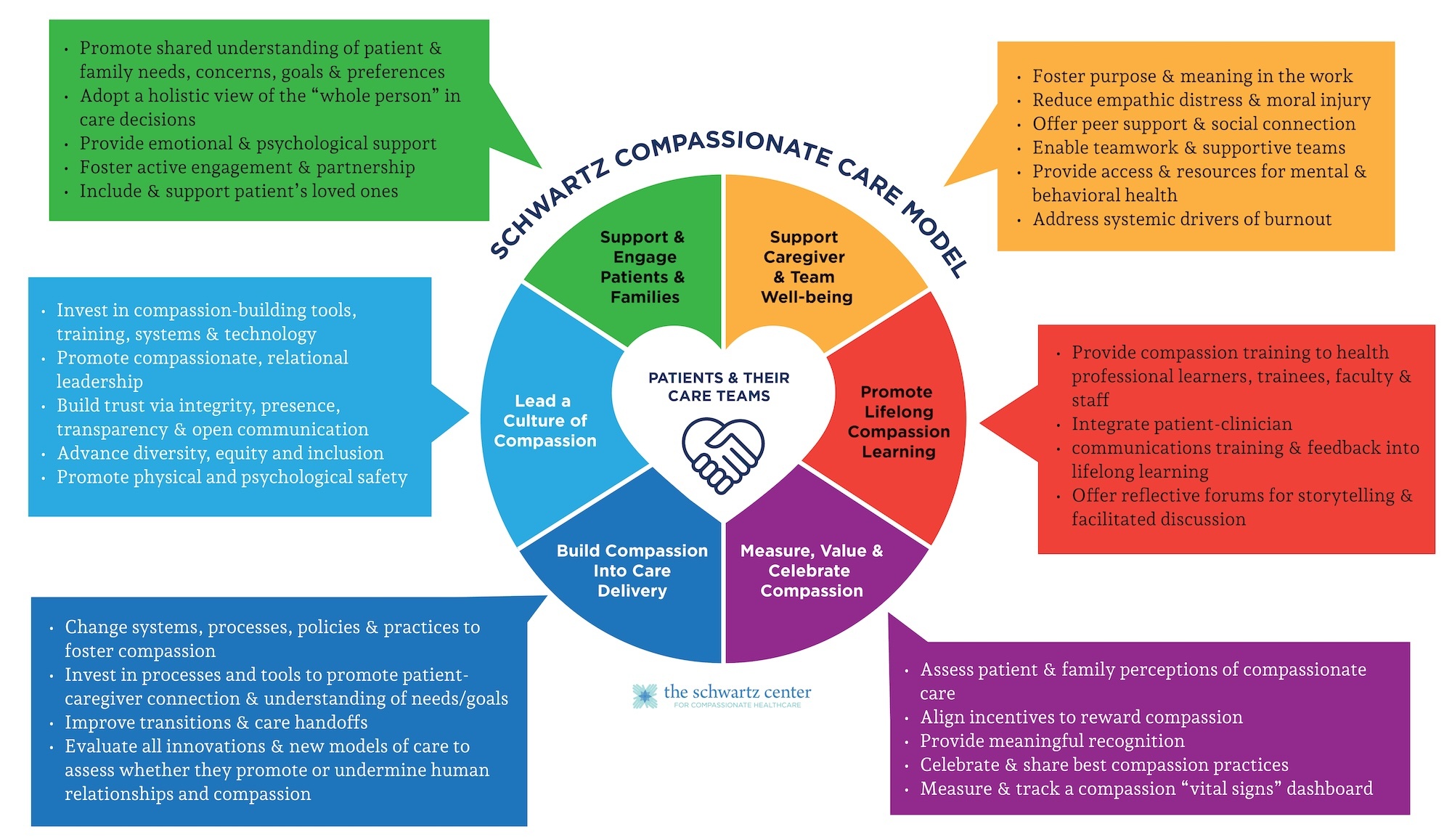
Building Compassionate Healthcare: A Leadership Framework
Healthcare organizations thrive when they build cultures of compassion. This framework, grounded in evidence-based research and expert consensus, outlines six domains of focus and improvement opportunity. Leaders can utilize this framework to assess current state and then prioritize high-impact initiatives that can best advance compassion for patients, care teams, and their healing relationships.
© 2026 The Schwartz Center. All Rights Reserved. Site Map

