Schwartz Rounds for Higher Education Institutions
Health professional students are asked to absorb an extraordinary amount, not just academically, but emotionally. From their first clinical encounters, they begin navigating situations that most people never face: witnessing suffering, delivering difficult news, confronting mortality.
The Schwartz Rounds® program gives students a regular, facilitated space to process these experiences together. Sessions are built around stories and themes that resonate across roles, led by trained facilitators and grounded in the kind of honest reflection that helps people stay connected to compassionate care.
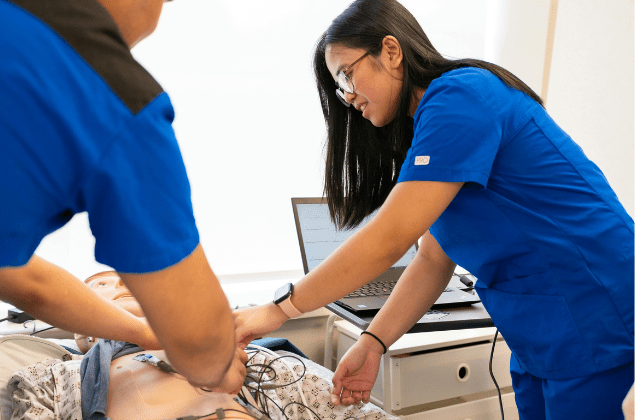
Health professional students are expected to learn, perform, and keep moving, with little opportunity to pause and reflect. Burnout risk runs high. The data shows:
Left unaddressed, these pressures don’t stay contained to students’ personal lives. They shape the kind of clinicians students become. Evidence suggests that attending Schwartz Rounds sessions as a student promotes a career-long approach to professional life that includes reflection on and processing of the emotional impact of work in health and care.
“I was shaped professionally by the openness of senior colleagues when reflecting on the emotional and psychological impact of their work. I felt encouraged by their openness and vulnerability… I found courage to be more accepting of my own humanity and difficult feelings I encountered in my practice… I am now a Schwartz facilitator and remain passionate about the power of storytelling. I think we all need more compassionate, safe spaces where we can draw on the collective strength of our workforce through sharing, listening and responding to staff stories.” – A student participant
The Solution: The Schwartz Rounds Program
Healthcare and social services schools are already invested in training technically excellent healthcare workers. The Schwartz Rounds program addresses something that technical training alone can’t: the emotional formation of a caregiver.
The program creates a structured, facilitated space for students to step back from the pace of training and talk honestly about what they’re experiencing: the cases that stay with them, the moments of uncertainty, the tension between what they feel and what they think they’re supposed to feel. These aren’t therapy sessions or debriefs. They’re conversations that help students make sense of the human side of caregiving.
Crucially, the Schwartz Rounds program bring together students, residents, attending physicians, nurses, and other staff in the same room. The opportunity to see experienced clinicians speak openly about the emotional weight of their work may be one of the most powerful things a student can witness.
“I feel more courage…it’s actually kind of inspiring…I’m about to go on placement tomorrow, to intensive care, so there’s a lot of things that I’m keeping in my mind from the Schwartz Rounds.” – A student participant

Students who participated in Schwartz Rounds programs report:
93%
said the program enhanced their insight and self-awareness.
82%
said the sessions gave them insight into how others feel/think about caring for patients.
NUMBER
DATA HERE
Benefits of the Schwartz Rounds Program
The Schwartz Rounds program has a 30-year track record in healthcare settings, with strong evidence of reduced stress, improved teamwork, and sustained compassion. More than 100 research studies on the program have shown significant benefits, including several focused on health education settings. In education specifically, the program has been shown to help students:
Built for the Interprofessional Classroom
Healthcare is delivered by teams, not individuals — yet most health professions students train in silos. The Schwartz Rounds program gives institutions a structured way to bring students together across disciplines before they reach the workplace, building a shared language for the emotional and ethical realities of caregiving early.
When nursing, medical, social work, pharmacy, and allied health students reflect together on a shared case:
A Concrete Answer to IPE Requirements
IPE is a mandate for most health professions programs — CAIPE, IPEC competencies, and accreditors expect documented, structured interprofessional experience, not just co-located classes. Schwartz Rounds meets that mandate without requiring institutions to build something from scratch:
The Business Case
The case for well-being programming in medical education has never been stronger, or more urgent. Accreditation bodies increasingly expect institutions to demonstrate that student well-being is embedded in the culture of training, not just addressed reactively.
More fundamentally, schools have a responsibility to graduate caregivers who are not just competent but sustainable, and capable of sustaining compassion over a long career. The Schwartz Rounds program is one of the most evidence-based tools available for building that capacity from the earliest years of training.
They don’t require overhauling a curriculum. They require protected time, trained facilitation, and a clear institutional message that the emotional experience of becoming a caregiver matters.
Check out these videos to see how some higher education institutions have implemented the Schwartz Rounds program.
An Animation Explainer: Schwartz Rounds for Students
This short video from the University of Liverpool explains what the Schwartz Rounds program for Higher Education students is all about.

Why Should Students Attend Schwartz Rounds?
This film was created by students at the University of Brighton.
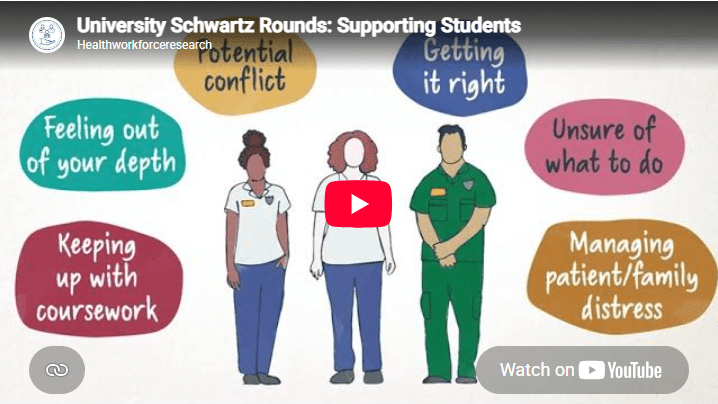
University Schwartz Rounds: Supporting Students
A short animation introducing Schwartz Rounds in a University setting, explaining what Schwartz Rounds are and how students may benefit from attending.
Lead with Compassion
If your organization is interested in joining our healthcare community, please complete the brief inquiry form and a Schwartz Center staff member will get back to you with next steps.
Additional Resources
References
More research can be found on our Schwartz Rounds Research page.
© 2026 The Schwartz Center. All Rights Reserved. Site Map
