The Impact of Healthcare Cost Controls on the Patient-Caregiver Relationship
In an ideal world, physicians would make their clinical decisions based solely on what is best for patients. But in a country where healthcare spending consumes 18 percent of the gross domestic product—about $3 trillion in 2014—issues of cost are beginning to penetrate the sanctity of the exam room. Prescription drugs, which account for nearly 10 percent of those expenditures, have become a key target.
At the Schwartz Center for Compassionate Healthcare’s recent New York Thought Leadership Breakfast, in partnership with NewYorkBIO and held at the New York Genome Center, a panel of experts representing diverse perspectives came together to discuss the impact of healthcare cost containment on the patient-caregiver relationship, with a specific focus on so-called “step therapies” to contain prescription drug costs.
NewYorkBIO is the leading advocate for life science research and commercialization in New York State, and the New York Genome Center is a consortium of academic, medical and industry leaders focused on translating genomic research into clinical solutions for serious disease.
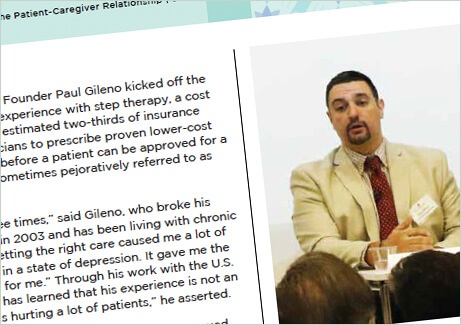
U.S. Pain Foundation President and Founder Paul Gileno kicked off the panel discussion by describing his experience with step therapy, a cost containment policy adopted by an estimated two-thirds of insurance plans. Step therapy requires physicians to prescribe proven lower-cost medications for a given condition before a patient can be approved for a higher-cost drug. The process is sometimes pejoratively referred to as “fail first.”
“I went through step therapy three times,” said Gileno, who broke his spine in a work-related accident in 2003 and has been living with chronic pain ever since. “The delays in getting the right care caused me a lot of time, a lot of pain, and it put me in a state of depression. It gave me the sense that no one was out there for me.” Through his work with the U.S. Pain Foundation, Gileno said he has learned that his experience is not an unusual one. “It [step therapy] is hurting a lot of patients,” he asserted.
Aran Ron, MD, chief medical officer of Oscar Health Insurance, argued that step therapy is no different than any other medical guideline that directs physician practice. “Current guidelines require a person with back pain to have rehabilitative therapy before surgery, and diet and exercise before gastric bypass surgery,” explained Ron. “I view this [step therapy] as no different than any other guideline a physician practicing first-class medicine would follow.”
He said guidelines created by medical societies and other medical groups routinely factor in cost. “Why wouldn’t we consider financial factors if there’s an equivalent alternative at one-tenth the cost?” Ron asked. “Wouldn’t it be logical, as well as ethically and financially appropriate, to use the less costly option?”
Ron pointed to a study published in the Annals of Internal Medicine in 2014, showing that patients who took generic statins were 6 percent more compliant than patients who were prescribed the brand name equivalent, leading to better overall health outcomes. “Price matters to patients and ignoring its impact is ill-advised,” he said.
Gileno said that when he refers to step therapy, he is not talking about substituting a generic equivalent for a more expensive brand name medication, but rather forcing doctors to prescribe a different drug altogether. “I understand the rationale, but as a patient, do you want to have to go through trial and error?” he asked.
J. Russell Teagarden, who serves on the federal government’s Patient-Centered Outcomes Research Institute’s Advisory Committee on Rare Diseases, said he agrees with the philosophy of step therapy, but exceptions must be made, for instance, when a specific rule runs contrary to a doctor’s clinical judgment. “Where it falls apart is execution because these decisions are sometimes left to mindless bureaucrats,” said Teagarden. But on the positive side, cost controls like step therapy enable insurers to cover extremely expensive medications like biologics to treat rheumatoid arthritis, which cost thousands of dollars a month.
Teagarden said he doesn’t believe it is incumbent upon physicians to defend step therapy to their patients, “but they should be able to discuss with patients the general purpose—trying to lower costs when clinically possible so more expensive therapies are available when patients really need them.”
Jane Wasman of Acorda Therapeutics, a biotechnology company focused on multiple sclerosis (MS) and spinal cord injury treatments, said that patients’ unprecedented access to medical information has also exerted pressure on the patient-caregiver relationship.
“Patients are very well educated,” said Wasman. “MS patients know about drugs before they’re on the market because they’ve been following the clinical trials. They’re walking into their doctors’ offices and saying, ‘This is the drug I want.’” She pointed out that this is much different from the past “when physicians could control costs merely by not mentioning the more expensive drug option and patients assumed they were getting what the doctor thought was best.”
Time is the enemy when trying to sort out issues of efficacy vs. cost with patients, said Wasman. “Lots of physicians talk about how they already don’t have enough time to spend with patients, especially those with complex conditions. Then in the middle of a complex discussion about patient care, they have to insert another discussion about whether the patient can afford therapy. It’s very challenging.”
How do insurance companies make these kinds of coverage decisions? How are clinical and other benefits weighed? The panelists agreed that one important consideration for insurers is cost avoidance—whether the selected drug will keep patients out of the hospital and ER. Otherwise, Teagarden said, there is no standard methodology used by insurers and pharmacy benefit managers to judge the worth of a medication. “What happens is a group of expert clinicians reviews the literature and strives to reach a reasonable consensus,” he explained. “Is it standardized? No. Should we be better at this? Yes.”
Wasman said that one of Acorda’s drugs is the only medication on the market that helps patients with MS walk better. While most MS patients can look forward to a normal or close-to-normal life span, their lives can be significantly impacted. “We’ve had to work with insurers and other payers to educate them about the value of the drug—being able to cross the street before the light changes or walking your daughter down the aisle at her wedding,” she said. “It can be hard to quantify the value of things like this. We want a system that does place value on patients, and not just the dollars and cents issues.”
Teagarden said that clinical value can be relative. He gave the example of cystinosis, a rare genetic disorder that leads to problems with renal function. The traditional drug used to treat it, at an annual cost of $10,000, must be taken every six hours and causes the patient to smell bad. A new drug, with an annual price tag of $250,000, doesn’t cause the same odor problem and can be administered every 12 hours.
“A quarter of a million dollars sounds ridiculous until you learn that the majority of patients with this condition are teenagers,” said Teagarden. “And what’s more important to an adolescent than not smelling bad and sleeping through the night?”
Teagarden said that when he worked for Medco, a pharmacy benefits management firm now called Express Scripts, he gained insight into the coverage calculations payers must make. “Without policies like step therapy, insurers wouldn’t be able to foot the bill for high-cost therapies like biologics for rheumatoid arthritis. In some ways, these programs enable coverage,” he explained.
Tom Lynch, MD, director of the Yale Cancer Center and physician-in-chief at the Smilow Cancer Hospital at Yale-New Haven, asked how the healthcare system can rein in costs without threatening the sanctity of the patient-caregiver relationship. “How do we [contain costs] in a way that doesn’t threaten the essential interactions between healthcare providers and patients?” he asked. “How do we do it in way that trains healthcare workers to become better at connecting with patients?”
Lynch described a Centers for Medicare and Medicaid Services pilot project that has the potential to contain costs and improve the patient-caregiver relationship. The Oncology Care Model gives oncologists treating Medicare patients with chemotherapy an additional monthly payment of $1,000 per patient for six months plus retrospective performance-based payments if they are able to meet 10 key quality measures.
“For the first time, [the quality metrics] resonate with me,” said Lynch. They include keeping patients out of the ER, giving them earlier access to a palliative care doctor, and discussing hospice care earlier in the course of illness.
Lynch pointed to a 2010 study by Massachusetts General Hospital oncologist Jennifer Temel, MD, showing that lung cancer patients who received palliative care earlier in their disease trajectory not only had a better quality of life, but also lived longer. “Cost containment will force doctors and nurse practitioners to get better at having these difficult discussions,” said Lynch. “The Schwartz Center teaches us the importance of that connection. If we are to save money with the Oncology Care Model, we need to improve our ability to have those conversations.”
All of the panelists agreed that physicians need to be better informed about the cost of treatment. “I run a major cancer center and hospital, and until six months ago, I couldn’t have told you how much our most common lung cancer regimen costs,” Lynch said. “The New England Journal of Medicine doesn’t include cost calculations in their articles about new drugs coming out.”
Teagarden said some physicians are becoming more cognizant of the cost of drugs and are becoming patient advocates. The most recent example, he said, was a physician group upset about the high cost of a cystic fibrosis drug. “There’s more access to information and physicians are trying to affect things,” he added.
According to Lynch, discussions of resource utilization are now mandatory when teaching residents and medical students. At his hospital, cost guidelines are integrated into the electronic medical record (EMR) and when a treatment regimen is chosen, the cost is presented. The ordering clinician, however, is not privy to how much of the cost the patient is responsible for. “This is a brave new world,” he said. “We can’t teach this just through EMRs. Incorporating it into the medical curriculum is becoming even more important.”
Ron said he teaches fourth year medical students and is always “amazed and shocked” at how little they know about the economics of healthcare. “They think it’s not really their issue, that it’s the managed care guys— the bad guys—who are imposing this.” He added that future physicians will need to learn that cost is their concern as well.
More Issue Briefs & Research
September 11, 2026
Compassion as a Business Imperative in Healthcare: A Conversation With the Schwartz Center and Monigle
Dr. Michael Gustafson, Chief Executive Officer of the Schwartz Center for Compassionate Healthcare, and Dave Middendorf, Executive Director of Health, Care, and Wellness at Monigle sat down to discuss what it actually takes to build compassion into a healthcare organization. They cover why getting it wrong impacts burnout, trust, and revenue, and where the industry is headed as AI adoption by both patients and providers accelerates.
Their conversation reflects Monigle’s partnership with the Schwartz Center, which brought together Monigle’s Humanizing Brand Experience model with the Schwartz Center Compassionate Care Scale™ to create the Compassion Index — a new view of how compassion shapes trust, loyalty, and business outcomes in healthcare
April 22, 2026
Seeing Kindness: Using Images of Caring to Foster Compassion in Healthcare
Stress impacts everyone in healthcare, eroding compassion, straining relationships, and contributing to burnout and error. Yet research shows that simply seeing acts of kindness can reduce stress, promote calm, and foster a sense of shared humanity.

April 3, 2026
Schwartz Attorney Breakfast Executive Summary
The Schwartz Center for Compassionate Healthcare hosted its annual Attorney Breakfast featuring Dr. Troyen Brennan, a nationally recognized health law, public policy, and healthcare delivery expert. Dr. Brennan is the author of the recently published “Wonderful and Broken: The Complex Reality of Primary Care in the United States.”
The event featured a comprehensive discussion of primary care in the United States, its critical role in healthcare delivery, and the relationship between effective primary care and compassionate medicine. Dr. Brennan drew insights from his extensive fieldwork throughout the country.
August 1, 2025
The Neuroscience of Compassion: Tools to Tap Into Its Power for Good
Advances in brain imaging and the neurosciences allow previously unimaginable insights into the workings of the human mind, but not necessarily how to translate that knowledge into a benefit or patients or providers. This is the root of the T. Denny Sanford Institute for Empathy and Compassion’s research. This webinar featured several Sanford Institute leaders discussing how they leverage the neurobiology of empathy and compassion to create initiatives that are game-changing for medical education and patient care.

August 6, 2025
Using the Schwartz Rounds Program to Build Social Capital
Dr. Tom Lee, chief medical offer at Press Ganey and author of “Social Capital in Healthcare,” described how social capital, defined as networks of relationships characterized by trust, shared values, and mutual support, is the foundation of compassionate healthcare delivery.

July 23, 2025
Donor Network West: A Decade of Compassion
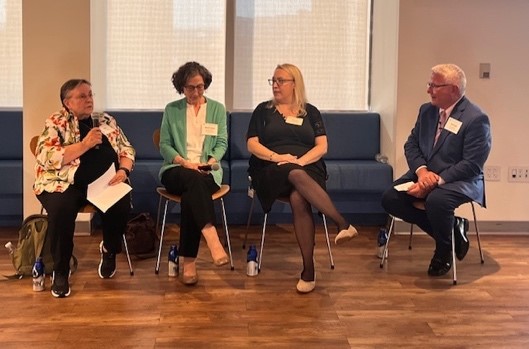
Since 2016, Donor Network West (DNW), a California-based organ procurement organization, has implemented the Schwartz Rounds program as a cornerstone of their organizational culture. Led by facilitator Gwenn Silva, the program has become an essential support system for staff who ace the unique challenges of working with death and trauma daily.
July 18, 2025
Advancing Compassion Through the Schwartz Rounds Program in a Healthcare Insurance Setting
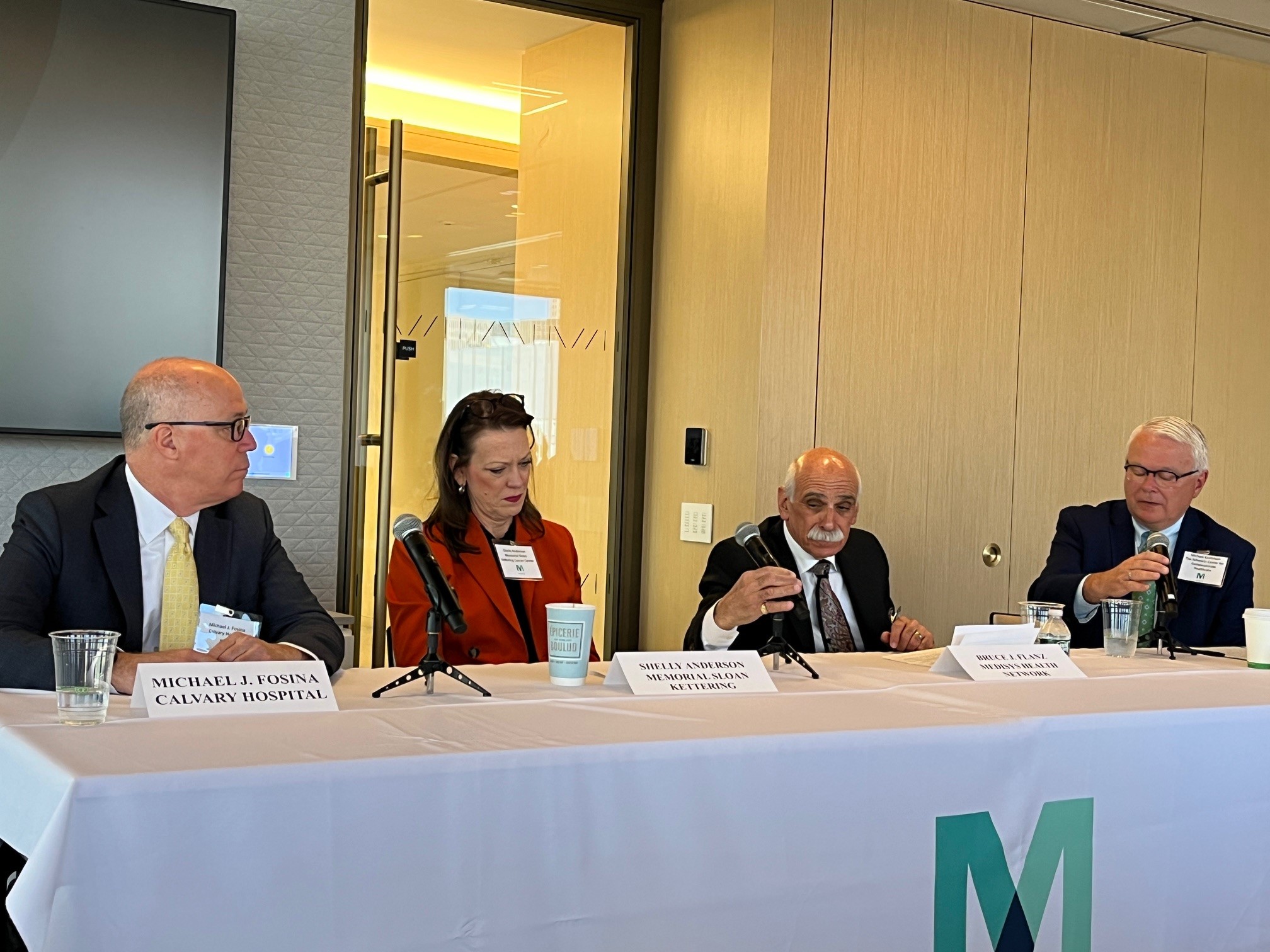
The Schwartz Center recently hosted a roundtable discussion on the successful implementation of the Schwartz Rounds program at Blue Cross Blue Shield of Massachusetts (BCBSMA), demonstrating how this innovative adaptation can transform organizational culture, enhance employee well-being, and ultimately improve outcomes for both their staff and patient members.
June 27, 2025
The Importance of Compassion in Front-Line Healthcare Delivery
The Schwartz Center for Compassionate Healthcare hosted a roundtable discussion focusing on the critical role of compassion in front-line healthcare delivery. Three distinct healthcare organizations — a safety net hospital system, a cancer center, and an end-of- life care facility — are each addressing the challenge of maintaining compassionate care despite increasing external pressures.
May 9, 2025
Compassion and Safety: A Trauma-Informed Approach for Patients and Providers
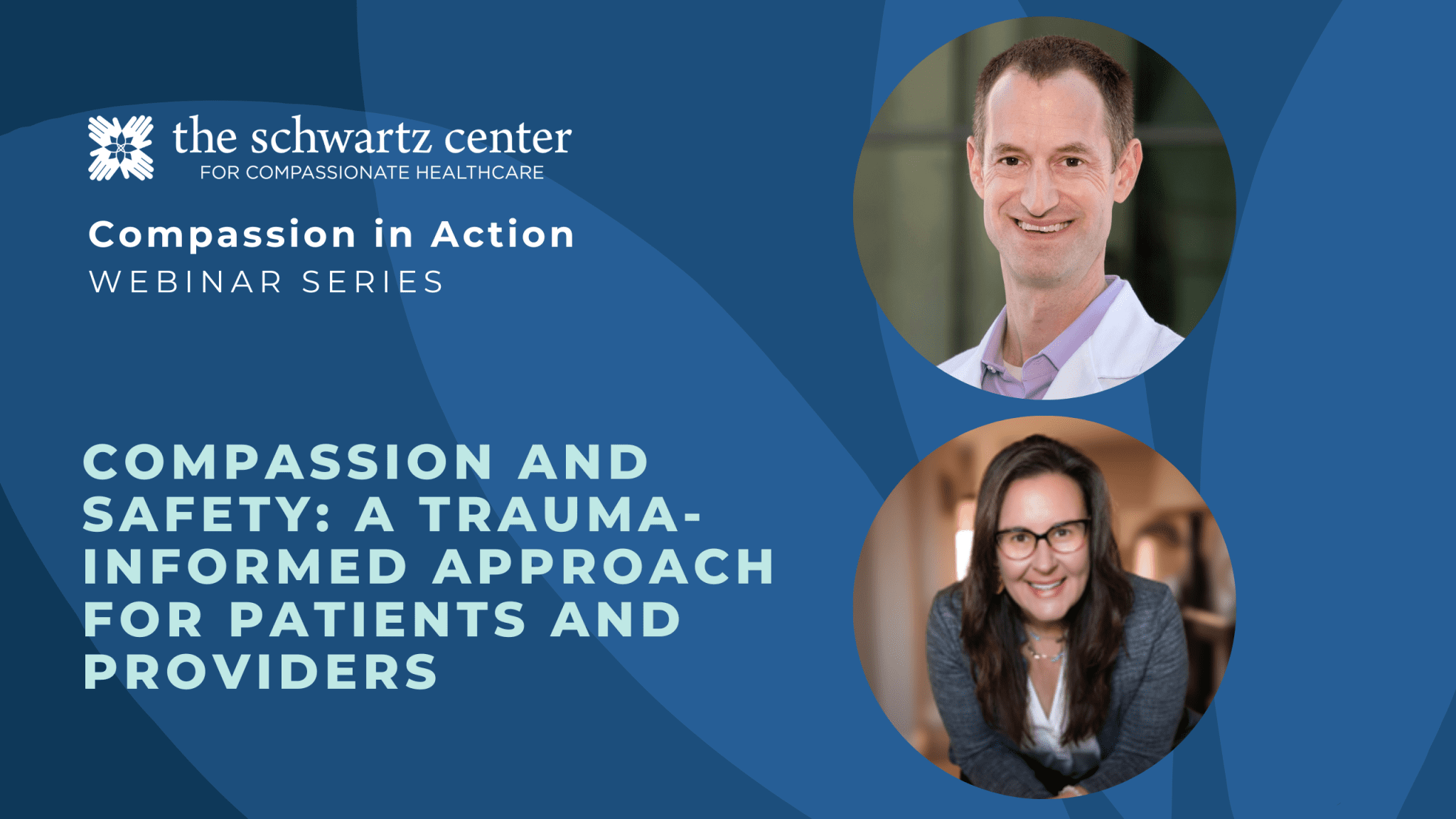
Patient safety events impact not just patients, but also the healthcare team members who care for them. Clinicians can experience emotional distress, guilt, and loss of confidence – which can be compounded by legal consequences and professional repercussions. The emotional aftermath of these events may contribute to a culture of fear in healthcare settings, making it harder to learn from mistakes and improve patient care. This webinar, featuring Maria Gonsalves Schimpf, MA, MT-BC, well-being leader at Boulder Community Health, and Dr. Read Pierce, chief quality, safety, and transformation offer at Denver Health, explored how grounding patient safety improvement efforts in compassion science benefits both patients and providers. Panelists highlighted the connection between burnout, compassion, and patient safety, providing practical strategies for implementing trauma-informed practices in healthcare settings.
Case for Compassion/Compassion ROI
Compassion means not only understanding and feeling another’s suffering, but also taking action to help them. While empathy means feeling or cognitively understanding another’s emotions and perspectives, compassion goes further by motivating behaviors to reduce their distress.

Schwartz Rounds Research
More than 100 peer-reviewed and descriptive studies have documented the benefits of the Schwartz Rounds program for over 25 years.
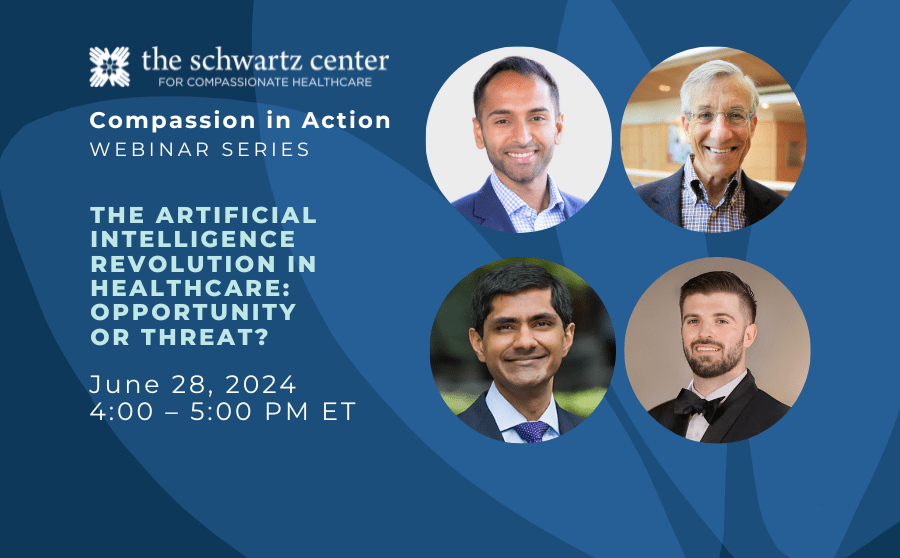
June 28, 2024
Executive Summary: The Artificial Intelligence Revolution in Healthcare: Opportunity or Threat?
Artificial intelligence (AI) is here and evolving quickly. This presentation will discuss the opportunities, promises and challenges of AI hosted by Schwartz Center Chief Medical Officer Beth Lown, MD, moderated by Karl Swanson, MD, co-founder and head of data science at Quench, and panelists Michael Lesh, MD, CEO and founder of Quench, Ashwin Nayak, MD, MS, clinical assistant professor of medicine at Stanford University, and Vivek Rudrapatna, MD, PhD, gastroenterologist and assistant professor at University of California, San Francisco. Our panelists described how AI is being used in healthcare now, and what we can expect in the near future and long-term. We discussed how this may affect compassionate patient care and healthcare workforce well-being, and what we can do collectively to shape this future. The discussion followed with Q&A.
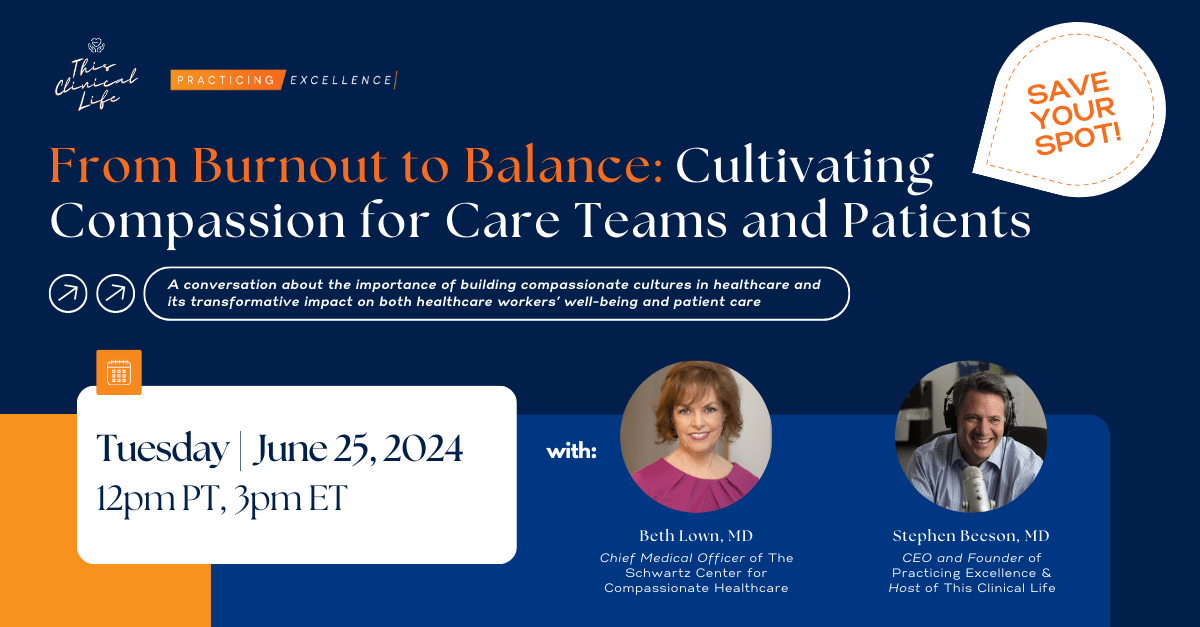
June 13, 2024
Cultivating Compassionate Cultures in Healthcare: Enhancing Clinician Well-being for Better Patient Outcomes
In line with our efforts to build more compassionate cultures within healthcare, our Chief Medical Officer Dr. Beth Lown, will be joining Dr. Stephen Beeson, CEO and Founder of Practicing Excellence, for a live discussion this 25th of June at 12 PM PT/3 PM ET. In this live discussion, they will shine a light on building compassionate cultures in healthcare and the benefits of the human development journey to enhance everyone’s ability to connect with patients, collaborate with peers, and lead in ways that inspire meaningful change. Visit the episode page to find out more.
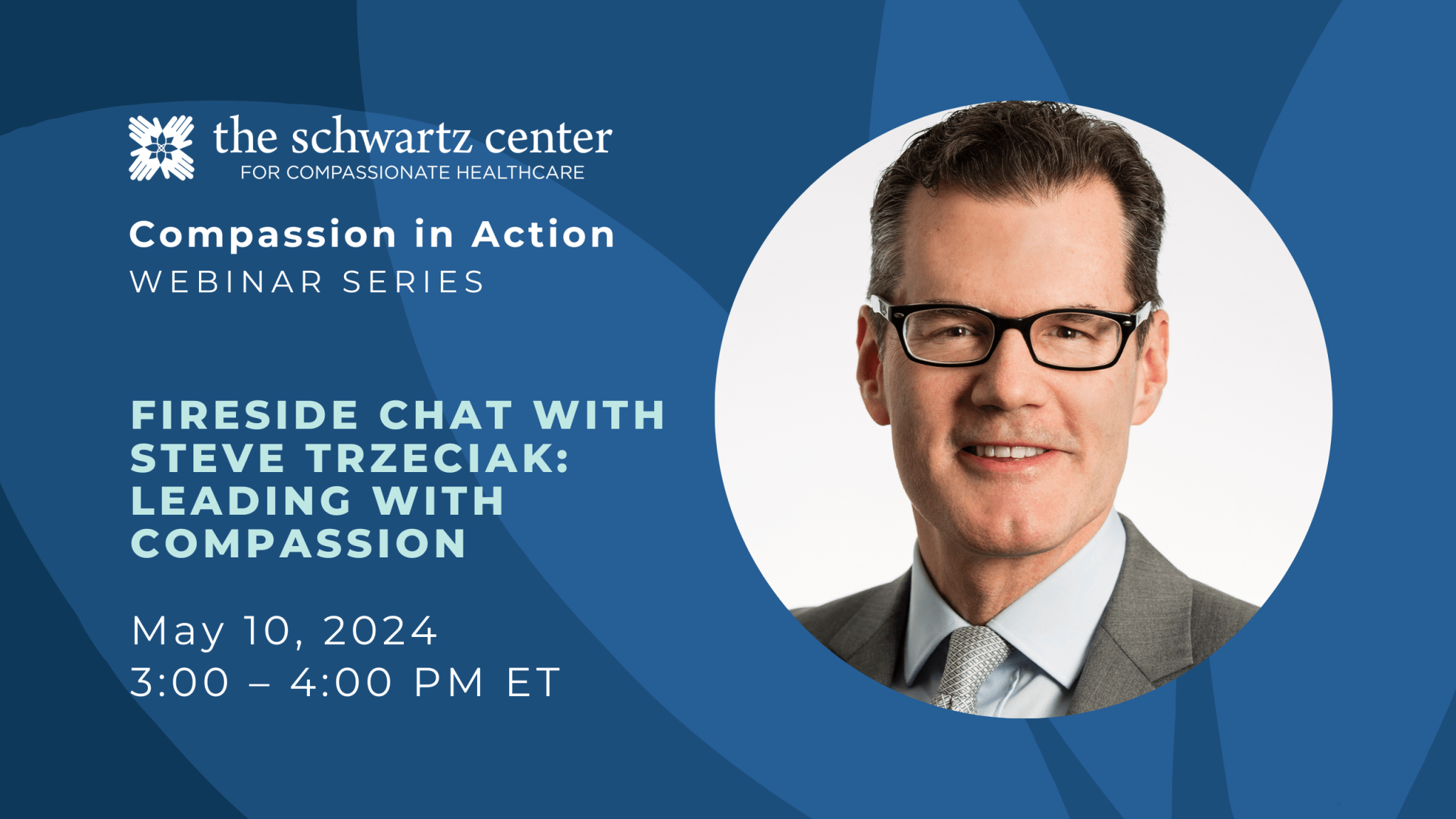
May 10, 2024
Executive Summary: Fireside Chat with Steve Trzeciak: Leading with Compassion
Join us for a fireside chat with Stephen W. Trzeciak, MD, MPH, and Schwartz Center Chief Medical Officer Dr. Beth Lown. Dr. Trzeciak is chairman and chief of the department of medicine and medical director of the Adult Health Institute at Cooper University Health Care. He is also a professor of medicine at Cooper Medical School of Rowan University. Drs. Lown and Trzeciak will discuss how we create and, conversely, can erode compassionate cultures and how to demonstrate empowered compassion for ourselves and others. You will also learn about research that highlights the benefits of compassion, including its positive impact on patients, healthcare workers, and organizational culture and profitability.

April 1, 2024
The Healing Healthcare Initiative: Guiding Leaders To Heal A Traumatized Workforce
We published a paper in “Healthcare Management Forum” describing early results of the Schwartz Center’s Healing Healthcare Initiative (HHI) pilot program. As we know, the COVID-19 pandemic exacerbated burnout, highlighted health inequities, and increased staffing shortages. In particular, it intensified psychological stress injuries and mental health issues among healthcare workers and leaders.
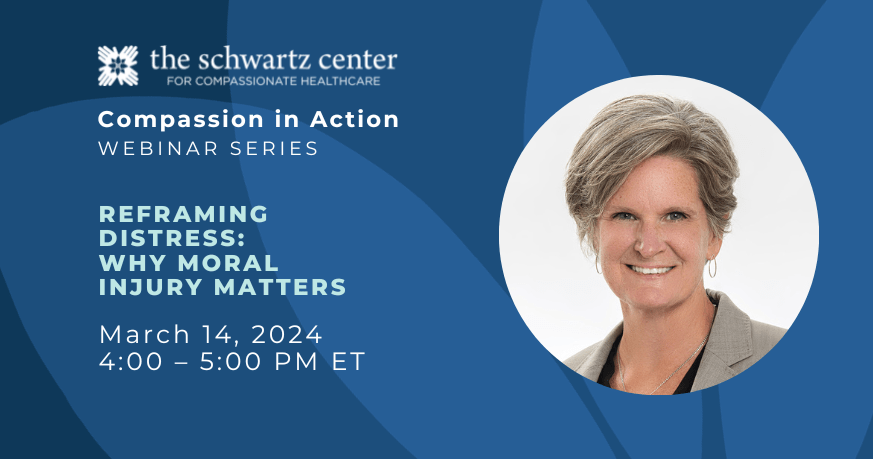
March 14, 2024
Executive Summary: Reframing Distress: Why Moral Injury Matters
For decades, interventions for clinician distress have been less effective than hoped. By expanding our understanding of the clinicians’ experience to include moral injury, we can create organizations with thriving practitioners who can offer better care for their patients. Join us for this special webinar, hosted by Schwartz Center Chief Medical Officer Dr. Beth Lown, as we learn from Dr. Wendy Dean, CEO and co-founder of The Moral Injury of Healthcare. Dr. Dean is the author of “If I Betray These Words: Moral Injury In Medicine” and “Why It’s So Hard For Clinicians to Put Patients First,” and cohost of the “Moral Matters” and “43cc” podcasts.
January 30, 2024
Executive Summary: Toward a Healing Organization With Dr. Ken Epstein
In this webinar, Dr. Ken Epstein explains the characteristics of organizations that induce and perpetuate trauma through inequitable practices and policies, hierarchical decision-making, and reactivity rather than intentional reflection. Becoming a Trauma-Informed System (TIS) and ultimately a healing organization requires systemic change that promotes connection, coherent meaning making, and inclusive collaboration to address and prevent the ways organizations can induce stress and harm on its employees and the community.
June 17, 2021
What Has the Pandemic Revealed About Health Equity and Where Do We Go From Here?
The COVID-19 pandemic has thrown into sharp relief long-standing inequities in the American healthcare system. Black and brown communities have experienced a disproportionate number of coronavirus cases and deaths. For example, at the height of the pandemic in New York City, age-adjusted mortality rates for Blacks and Latinos were double those of whites and Asians. The pandemic’s economic devastation has been unevenly experienced as well. In a national survey conducted in July and August of 2020, 72% of Latino, 60% of Black, and 55% of Native American people reported they were experiencing serious financial problems. In contrast, 37% of Asian and 36% of white people said the same.
National Schwartz Rounds on Substance Disorders
Despite our scientific understanding of addiction as a chronic disease whose sufferers are prone to relapses, many health professionals and the public still believe that addiction is a choice or a moral failing. Furthermore, common everyday language and slang stigmatizes individuals with SUD and creates cognitive bias towards punitive judgment rather than compassion.
Building Compassion into the Bottom Line
Compassion is not a panacea for what ails the U.S. healthcare system, but it can be the foundation for improving patients’ care experiences, patient and caregiver satisfaction, and a hospital’s bottom line.
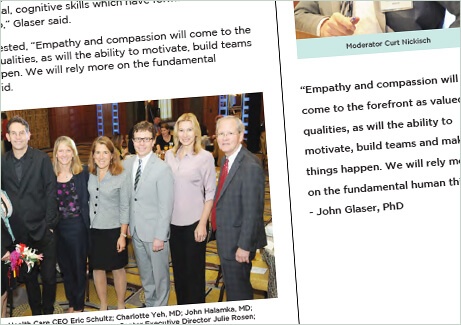
Technology and the Patient-Caregiver Relationship: Another Look
At a recent panel discussion in Boston, four thought leaders who work at the intersection of medicine and technology discussed how new healthcare technologies are affecting the patient-caregiver relationship.
Recommendations from a Conference on Advancing Compassionate, Person- and Family-Centered Care
Compassion is essential for effective collaboration among healthcare professionals, staff, patients and families. But despite evidence supporting the importance of compassionate healthcare, the concepts and skills related to empathy and compassion, and that are needed to provide person-/family-centered and relationship-based care, are not routinely taught, modeled and assessed across the continuum of learning and practice.
Advancing Compassionate, Patient-and Family-Centered-Care through Interprofessional Education for Collaborative Practice
In our increasingly complex healthcare environments, collaboration is essential if we are to progress toward the “Triple Aim” of creating positive patient and family experiences and better health at lower cost.
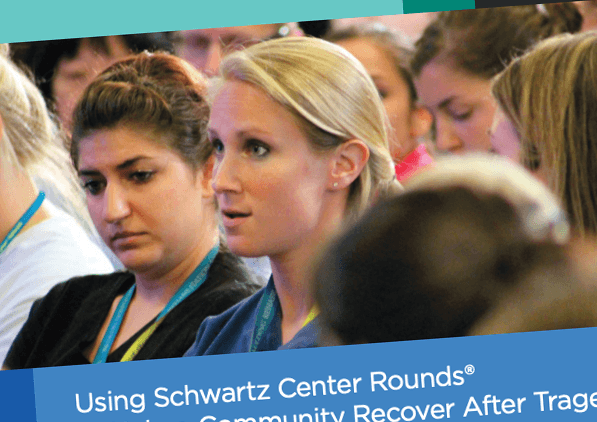
Using Schwartz Center Rounds to Help a Community Recover After Tragedy
Between October 2013 and April 2014, the Schwartz Center for Compassionate Healthcare and the Conference of Boston Teaching Hospitals (COBTH) held eight special Schwartz Center Rounds® sessions for hospital staff , first responders and medical volunteers who treated those injured in the 2013 Boston Marathon bombings.
Seven Guiding Commitments: Making the U.S. Healthcare System More Compassionate
Despite the current focus on patient centeredness, healthcare professionals face numerous challenges that impede their ability to provide compassionate care that ameliorates concerns, distress, or suffering.
© 2026 The Schwartz Center. All Rights Reserved. Site Map
